

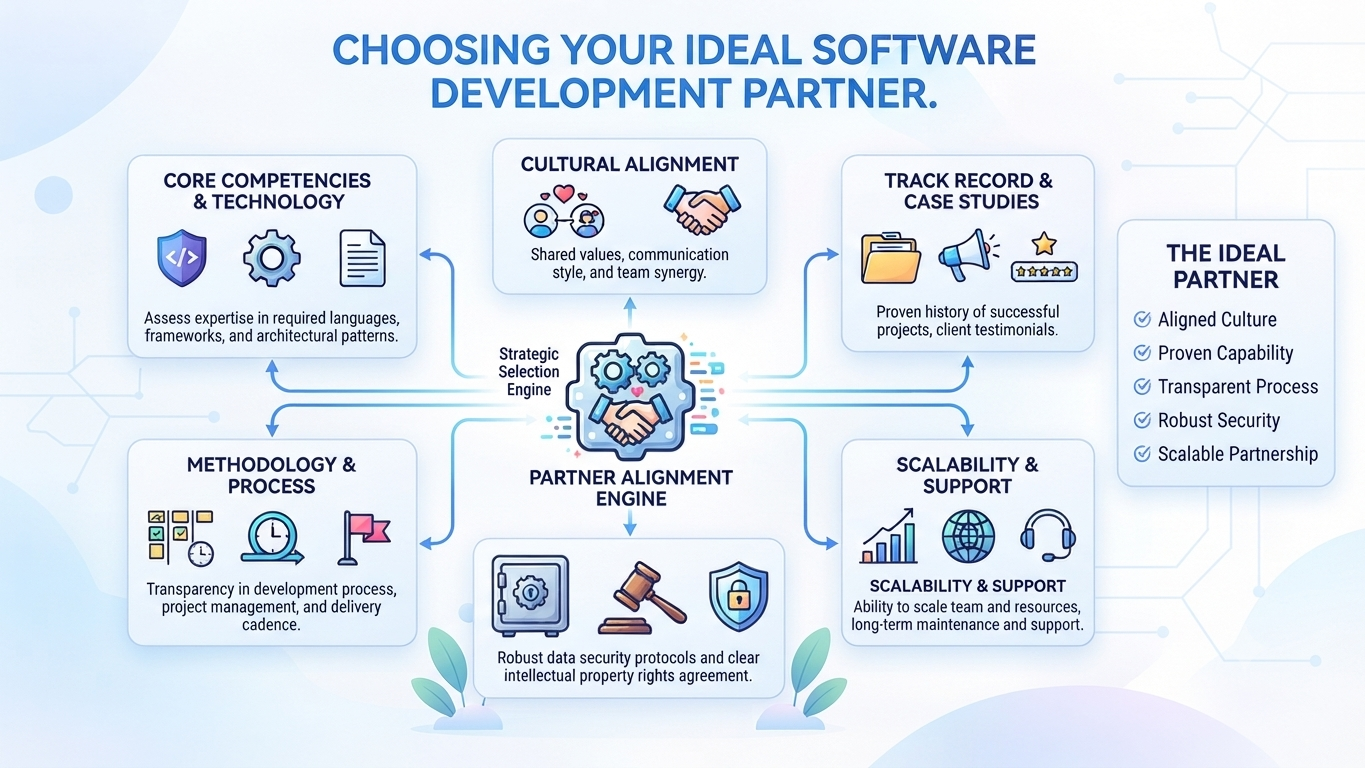
Most bad software outcomes aren't caused by bad engineers. They're caused by a bad match between a client and a vendor that becomes obvious only after the contract is signed and the deposit is spent. If you're evaluating software development companies for the first time, here's what actually separates a good long-term partner from an expensive lesson.
The person on the sales call is rarely the person writing your code. Ask directly: who is on the team, what's their experience level, and will they stay assigned to your project for its duration? A vendor that can't answer this clearly is telling you something.
A quote that arrives within a day of a single call is a red flag, not a good sign. A partner worth working with will ask pointed questions about your users, your constraints, and your existing systems before committing to a number — because a real estimate depends on those answers.
At some point during a real project, a good partner will tell you something you don't want to hear — that a feature will take longer than hoped, or that a requirement conflicts with another one. Ask a prospective vendor for an example of when they pushed back on a client. If they can't think of one, they either haven't done enough real project work, or they say yes to everything — which usually costs you more later.
Clarify intellectual property ownership, hosting access, and admin credentials in writing before the project starts, not after. A trustworthy partner will offer this without being asked twice.
The cheapest quote is rarely the cheapest project. Ask what happens after launch: is there a support plan, what does a bug fix cost, and how quickly do they respond to a production issue? A lower hourly rate paired with slow post-launch support often costs more over a year than a higher rate with fast, included support.
Before signing with any software development partner, you should be able to answer: who exactly is on the team, how they scope work, what happens when requirements change, who owns the code, and what post-launch support looks like. If a vendor can't give clear answers to all five, that's information too.